
Welcome to the Pocket Psych Blog
Evidence-informed, Neuroaffirming. Written for the people doing the work.

OUR BLOGS
Whether you're a clinician looking for a new lens, a parent trying to make sense of what your child is experiencing, or an educator navigating something you weren't trained for; you're in the right place.
At Pocket Psych, we believe that good psychology should be accessible. Not watered down, not oversimplified — but clear, warm, and actually useful in the real world. This blog is where we share what we know, what the research says, and what we're thinking about.
At Pocket Psych, we’re on a mission to make psychology something you can see, feel and carry with you – bright, affirming and pocket-sized.
Our Blogs

Beyond The Panic: What we actually know about teens and their screens
The conversation about teenagers and screens is rarely as simple as "less is more" — and the research backs that up. While higher overall screen time is linked to anxiety and depression in teens, the type of use matters enormously: passive scrolling carries very different risks to creative, connected, or purposeful engagement. Social media disproportionately harms girls, gaming is neither all good nor all bad, and the clearest finding in the literature is that screens near bedtime consistently disrupt sleep.
For neurodivergent young people, the picture is more nuanced still — technology often serves to support social functions, and increased screen use can be a sign of burnout rather than a cause of it. This post unpacks what the research actually shows, and what it means for families and clinicians trying to make sense of a young person's relationship with their devices.

Autism and ADHD Burnout In Teen Girls
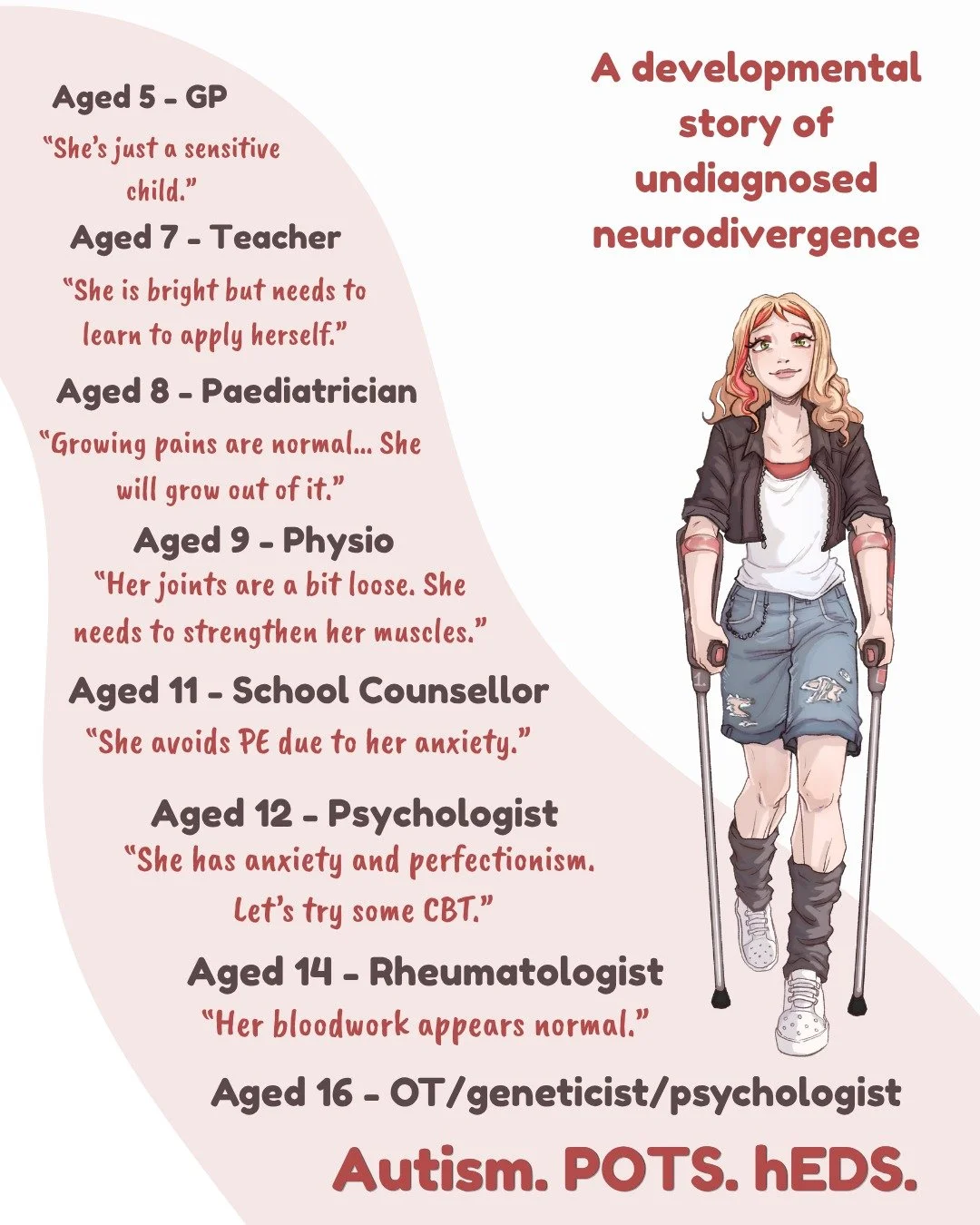
Neurodivergent burnout in teen girls is rarely a sudden collapse — it's the cumulative result of years of hidden pressure: masking to fit in, meeting relentless social and gender expectations, managing sensory overload, and navigating a world built for a different kind of brain.
Girls are particularly at risk because they're more likely to internalise their struggles, appear to be coping, and go unrecognised until the exhaustion is already chronic. By the time support arrives, many have been running on empty for a very long time.

But They Went on Tuesday: Understanding Fluctuating Capacity in School Can’t
For parents and schools supporting a young person with School Can't, few moments are more confusing than the Tuesday problem: they went yesterday, so why can't they go today? The answer lies in fluctuating capacity: the way a young person's ability to cope shifts daily based on sleep, accumulated stress, and what happened the day before — including the hidden recovery cost of a good day.
A young person who managed Tuesday is not proving that Wednesday is a choice; they are showing you what becomes possible when conditions are right. Using good days as evidence against bad ones increases shame, deepens the problem, and erodes the trust that is the foundation of any real recovery. This post explains what fluctuating capacity actually is, why it matters, and what schools and families can do differently.
Follow us on socials
@pocket.psych.au





You were born original. Don’t die a copy.
– John Mason