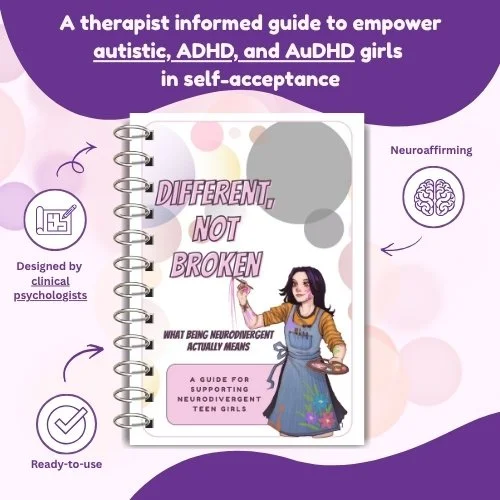
A practical, neuroaffirming guide to help families and professionals understand what a young person needs from their learning environment — and make informed decisions about school, education, and support.
For many neurodivergent young people, school can present unique challenges. Sensory overload, social demands, transitions, differences in communication and processing, and environments that are not designed with diverse needs in mind can contribute to anxiety, school avoidance, exhaustion, and feeling misunderstood.
This guide helps move the conversation beyond “How do we make school work?” to a more important question: “What environment allows this young person to feel safe, valued, and able to engage?”
Through guided activities, reflective prompts, and practical question sheets, this resource supports families and professionals to explore a young person’s strengths, needs, values, and learning preferences — creating a clearer picture of the environments where they are most likely to thrive.
Because the right educational environment is not about finding the “perfect” option. It is about understanding what allows a young person to feel supported, respected, and able to participate.
What you’ll get
A structured reflection and decision-making resource designed for caregivers, clinicians, and professionals supporting neurodivergent young people.
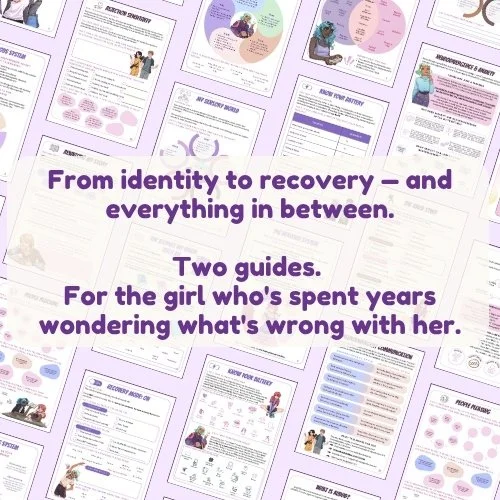
Inside the guide:
Guided activities to explore strengths, needs, and learning preferences
Reflection prompts to identify what helps a young person feel safe and supported
Question sheets to support conversations about educational options
Tools to consider sensory, social, communication, and regulation needs
A framework for making values-aligned decisions about learning environments
This guide is for you if…
You’re a parent or caregiver trying to understand what educational environment will best support your child.
You’re a psychologist, therapist, or allied health professional supporting families through education decisions.
You’re a school professional wanting to better understand the factors that help neurodivergent students engage and thrive.
Especially helpful when a young person is:
Feeling overwhelmed or unsupported at school
Experiencing school avoidance or attendance difficulties
Transitioning between educational settings
Struggling with sensory, social, or emotional demands
Needing a learning environment that better reflects their individual needs
After purchase, you’ll receive instant access to your digital download via the confirmation page and email.
A practical, neuroaffirming guide to help families and professionals understand what a young person needs from their learning environment — and make informed decisions about school, education, and support.
For many neurodivergent young people, school can present unique challenges. Sensory overload, social demands, transitions, differences in communication and processing, and environments that are not designed with diverse needs in mind can contribute to anxiety, school avoidance, exhaustion, and feeling misunderstood.
This guide helps move the conversation beyond “How do we make school work?” to a more important question: “What environment allows this young person to feel safe, valued, and able to engage?”
Through guided activities, reflective prompts, and practical question sheets, this resource supports families and professionals to explore a young person’s strengths, needs, values, and learning preferences — creating a clearer picture of the environments where they are most likely to thrive.
Because the right educational environment is not about finding the “perfect” option. It is about understanding what allows a young person to feel supported, respected, and able to participate.
What you’ll get
A structured reflection and decision-making resource designed for caregivers, clinicians, and professionals supporting neurodivergent young people.
Inside the guide:
Guided activities to explore strengths, needs, and learning preferences
Reflection prompts to identify what helps a young person feel safe and supported
Question sheets to support conversations about educational options
Tools to consider sensory, social, communication, and regulation needs
A framework for making values-aligned decisions about learning environments
This guide is for you if…
You’re a parent or caregiver trying to understand what educational environment will best support your child.
You’re a psychologist, therapist, or allied health professional supporting families through education decisions.
You’re a school professional wanting to better understand the factors that help neurodivergent students engage and thrive.
Especially helpful when a young person is:
Feeling overwhelmed or unsupported at school
Experiencing school avoidance or attendance difficulties
Transitioning between educational settings
Struggling with sensory, social, or emotional demands
Needing a learning environment that better reflects their individual needs
After purchase, you’ll receive instant access to your digital download via the confirmation page and email.

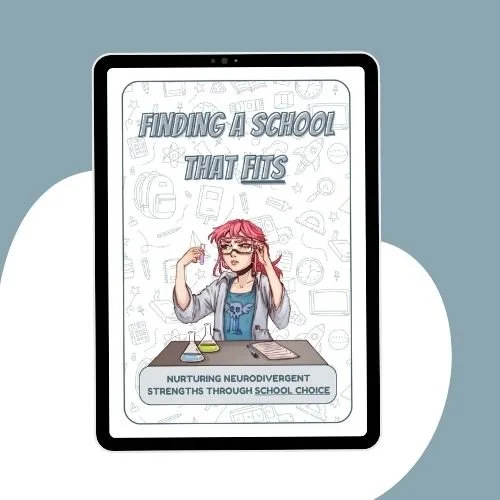 Image 1 of 3
 Image 2 of 3
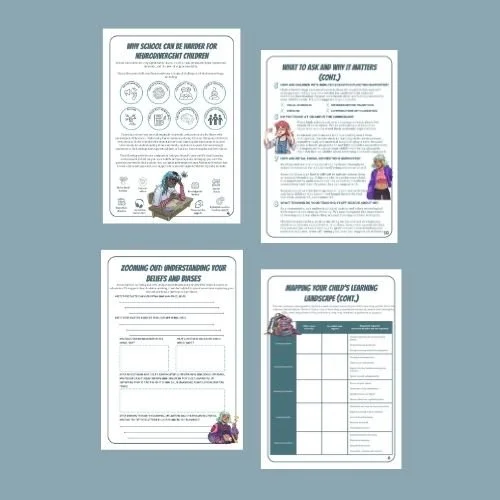 Image 3 of 3