A practical, neuroaffirming guide to help professionals and families understand Pathological Demand Avoidance (PDA), reduce pressure, and build safer, more collaborative relationships.
For young people with a PDA profile, everyday demands can often trigger a strong threat response, making traditional approaches based on compliance, rewards, or increased pressure ineffective. Families and professionals can be left feeling stuck, disconnected, and unsure how to move forward.
The PDA Clinician Guide provides a framework for understanding what is happening beneath the behaviour and supporting a shift from control and conflict towards trust, connection, and collaboration.
Designed for use in therapy sessions or professional practice, this resource supports families and clinicians to recognise underlying needs, reduce unnecessary pressure, and create the conditions where meaningful change can begin.
Because connection comes before collaboration.
What you’ll get
A structured psychoeducation and worksheet resource designed for psychologists, therapists, allied health professionals, and caregivers supporting young people with a PDA profile.
Inside the guide:
Parent handouts
PDA in Families — Understanding how PDA can impact family dynamics, relationships, and daily life
PDA and Anxiety — Exploring the connection between PDA, stress responses, and nervous system activation
Professional worksheets
Family Values — Clarifying what matters most and guiding support decisions
Increasing Connection — Strengthening relationships through safety and trust
Prioritising What Matters — Focusing on what is realistic and manageable
Window of Tolerance — Recognising and respecting emotional capacity
Disguising Demands — Using declarative language and reducing perceived pressure
Reducing Pressure — Creating a more supportive, low-pressure environment
Letting Go of Demands — Knowing when flexibility and stepping back are needed
Self-Care for Carers — Supporting caregiver wellbeing and reducing burnout
Using Humour — Exploring how playfulness and connection can reduce tension
This guide is for you if…
You’re a psychologist, therapist, or allied health professional supporting young people with a PDA profile.
You want practical, neuroaffirming strategies that reduce conflict, increase connection, and support emotional safety.
After purchase, you’ll receive instant access to your digital download via the confirmation page and email.
A practical, neuroaffirming guide to help professionals and families understand Pathological Demand Avoidance (PDA), reduce pressure, and build safer, more collaborative relationships.
For young people with a PDA profile, everyday demands can often trigger a strong threat response, making traditional approaches based on compliance, rewards, or increased pressure ineffective. Families and professionals can be left feeling stuck, disconnected, and unsure how to move forward.
The PDA Clinician Guide provides a framework for understanding what is happening beneath the behaviour and supporting a shift from control and conflict towards trust, connection, and collaboration.
Designed for use in therapy sessions or professional practice, this resource supports families and clinicians to recognise underlying needs, reduce unnecessary pressure, and create the conditions where meaningful change can begin.
Because connection comes before collaboration.
What you’ll get
A structured psychoeducation and worksheet resource designed for psychologists, therapists, allied health professionals, and caregivers supporting young people with a PDA profile.
Inside the guide:
Parent handouts
PDA in Families — Understanding how PDA can impact family dynamics, relationships, and daily life
PDA and Anxiety — Exploring the connection between PDA, stress responses, and nervous system activation
Professional worksheets
Family Values — Clarifying what matters most and guiding support decisions
Increasing Connection — Strengthening relationships through safety and trust
Prioritising What Matters — Focusing on what is realistic and manageable
Window of Tolerance — Recognising and respecting emotional capacity
Disguising Demands — Using declarative language and reducing perceived pressure
Reducing Pressure — Creating a more supportive, low-pressure environment
Letting Go of Demands — Knowing when flexibility and stepping back are needed
Self-Care for Carers — Supporting caregiver wellbeing and reducing burnout
Using Humour — Exploring how playfulness and connection can reduce tension
This guide is for you if…
You’re a psychologist, therapist, or allied health professional supporting young people with a PDA profile.
You want practical, neuroaffirming strategies that reduce conflict, increase connection, and support emotional safety.
After purchase, you’ll receive instant access to your digital download via the confirmation page and email.

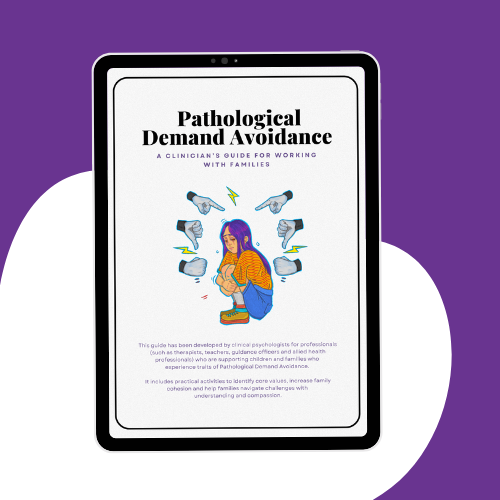 Image 1 of 3
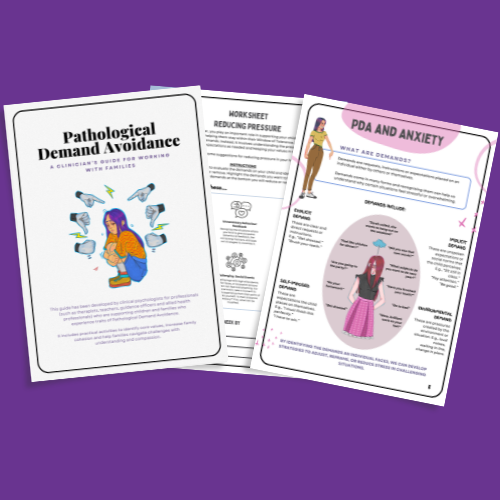 Image 2 of 3
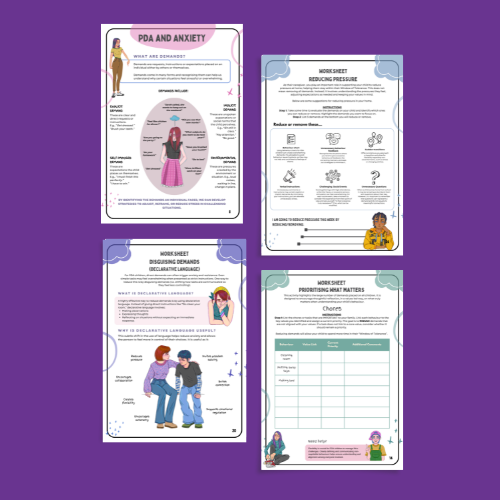 Image 3 of 3