
The Neuroaffirming Glossary
Plain-language definitions for clinicians, educators, and parents supporting neurodivergent young people.

AuDHD
AuDHD refers to the co-occurrence of autism and ADHD in the same person. Research suggests that autism and ADHD co-occur more frequently than previously understood, and that the combination can create a unique profile that looks different from either condition alone. AuDHD individuals may experience the hyperfocus of ADHD alongside the detail-oriented thinking of autism, while also navigating the ways the two conditions can work against each other — for example, the autistic need for routine conflicting with the ADHD tendency toward novelty-seeking.
Learn more about AuDHD in girls.
Alexithymia
Difficulty identifying, describing, or distinguishing between emotional states. Common in autistic individuals and those with ADHD. Often misread as emotional unavailability or lack of empathy rather than a difference in interoceptive processing.

Autistic Burnout (Neurodivergent Burnout)
Autistic burnout is a state of profound physical, emotional, and cognitive exhaustion that results from sustained masking, sensory overload, and the cumulative effort of navigating a world not designed for autistic people. It is distinct from general burnout or depression, though it can be misdiagnosed as either. Common features include loss of previously managed skills, extreme fatigue, increased sensory sensitivity, social withdrawal, and difficulty with basic daily tasks. Recovery typically requires significant reduction in demands and a return to safety before capacity can be rebuilt.
Learn more about treating Burnout.
Capacity Fluctuation
The natural variability in neurodivergent person’s available cognitive, emotional, and physical resources from day to day; and hour to hour. A child who managed school on Tuesday may be genuinely unable to do so on Wednesday. Not inconsistency of character; a neurological reality.
Check out our blog But They Went On Tuesday: Understanding Fluctuating Capacity and School Can’t

Demand Avoidance
Demand avoidance describes a pattern where a person experiences extreme anxiety in response to everyday demands and expectations; including demands they may want to meet. It is associated with both autism and ADHD. Demand avoidance is not defiance or wilful non-compliance; it is an anxiety-driven response that can escalate when pressure is applied. Neuroaffirming approaches to demand avoidance focus on reducing pressure, offering choice and autonomy, and working collaboratively rather than through compliance-based systems.
Learn more about how to work with PDA.
Double Empathy Problem
The double empathy problem is a concept developed by autistic researcher Damian Milton that reframes social difficulties in autism. Rather than locating the "problem" in the autistic person's ability to understand others, it proposes that miscommunication between autistic and non-autistic people is bidirectional — both groups can struggle to understand each other. This is an important neuroaffirming reframe: autistic people are not socially deficient, they are communicating differently in a world where neurotypical communication is treated as the default.

Dysregulation
Dysregulation refers to difficulty managing emotional and physiological states in response to stress or stimulation. A dysregulated nervous system may present as a meltdown, shutdown, intense emotional outburst, dissociation, or withdrawal. Dysregulation is not a behaviour choice — it is a nervous system state. A dysregulated person cannot access the thinking, reasoning, or learning parts of their brain until they return to a regulated state. Supporting regulation — rather than trying to reason with or discipline a dysregulated person — is the foundation of effective neuroaffirming practice.
Learn more about supporting a young person regulate.
Emotionally Based School Avoidance (EBSA)
Emotionally based school avoidance (EBSA) is a clinical term used to describe school non-attendance that is driven by emotional distress rather than truancy or parental withdrawal. It overlaps significantly with school refusal and school can't, and is increasingly used in UK clinical and educational settings. EBSA recognises that the avoidance is emotionally driven — rooted in anxiety, sensory overwhelm, social difficulties, or past negative experiences — and requires an emotionally attuned response rather than an attendance-focused one.

Executive Function
Executive function refers to a set of cognitive processes that manage and direct thinking and behaviour. These include planning, organising, starting tasks, managing time, holding information in working memory, regulating impulses, and shifting between tasks. Executive function differences are common in ADHD, autism, and other neurodivergent profiles, and can make everyday demands — getting ready for school, managing a workload, transitioning between activities — significantly more effortful. Recognising executive function differences as neurological rather than motivational is central to neuroaffirming practice.
Hyperfocus
Hyperfocus is an intense state of concentration on a particular topic or activity, most commonly associated with ADHD. During hyperfocus, a person may lose track of time, find it difficult to shift attention elsewhere, and produce work of significant depth and quality. Hyperfocus is often framed as a challenge — particularly when it applies to something other than what an adult considers important — but in neuroaffirming contexts it is also recognised as a strength: evidence of the capacity for deep engagement, passion, and expertise when interest is activated.

Interoception
Interoception is the sense that allows us to perceive the internal state of our body — hunger, thirst, pain, temperature, heart rate, the need to use the bathroom, and emotional states that manifest physically. Interoceptive differences are common in autism and ADHD and can mean a person has difficulty noticing, interpreting, or responding to their own body's signals. This can affect everything from knowing when to eat, to identifying emotions, to recognising when they are becoming overwhelmed before it reaches crisis point.
Low Demand Approach
A low demand approach is a strategy for supporting a young person — particularly one who is experiencing burnout, school can't, or demand-related anxiety — by temporarily stripping back expectations to the bare minimum. The goal is to allow the nervous system to settle and safety to be re-established before gradually reintroducing demands. A low demand approach is not giving up on expectations; it is recognising that a nervous system in a state of chronic threat cannot respond to normal expectations, and that creating safety is the necessary first step toward any meaningful engagement.

Masking
Masking (also called camouflaging) is the process of suppressing or hiding neurodivergent traits in order to appear more neurotypical. This can include copying social behaviour, forcing eye contact, suppressing stimming, scripting conversations, and monitoring how one appears to others. Masking is common in autistic people, particularly girls and women, and is associated with significant mental health costs including anxiety, depression, identity confusion, and burnout. Many people who masked extensively go undiagnosed for years because their outward presentation does not match clinical expectations.
Check out our blog about burnout in neurodivergent girls.
Meltdown
A meltdown is an involuntary response to overwhelming sensory, emotional, or cognitive input that exceeds a person's capacity to cope. It may look like an extreme emotional outburst, intense distress, or loss of control, and can be frightening for both the person experiencing it and those around them. A meltdown is not a tantrum and is not a choice — it is a nervous system response to overload. After a meltdown, a period of recovery is needed. Responding with calm, reduced demands, and a non-judgmental presence is far more effective than attempting to reason or discipline.

Neurodivergent
Neurodivergent is a term used to describe a person whose brain develops or functions differently from what is considered typical. It includes — but is not limited to — autism, ADHD, dyslexia, dyspraxia, dyscalculia, Tourette syndrome, and other profiles. The term was coined by Kassiane Asasumasu and is used in contrast to "neurotypical." Neurodivergent does not mean disordered or deficient — it describes a different kind of brain, with its own strengths, challenges, and support needs.
Neurodiversity
Neurodiversity is the concept that variation in human brain function and behavioural traits is natural and valuable — not a problem to be fixed. Coined by sociologist Judy Singer, the term encompasses the full range of neurological difference, including autism, ADHD, dyslexia, and related profiles. A neurodiverse world is one in which different kinds of minds are understood, accommodated, and valued. Neurodiversity is a framework, not a diagnosis — it shifts the question from "what is wrong with this person?" to "what does this person need to thrive?"

Neuroaffirming Practice
Neuroaffirming practice is an approach to working with neurodivergent individuals that starts from the position that neurological difference is not a deficit to be corrected, but a difference to be understood and accommodated. Neuroaffirming practitioners focus on understanding the individual's unique profile, reducing barriers in their environment, building on their strengths, and supporting their identity rather than trying to make them appear more neurotypical. It is the alternative to compliance-based and deficit-focused models of support.
Check out our Wired & Worthy Cards that support neuroaffirming practice.
Rejection Sensitive Dysphoria (RSD)
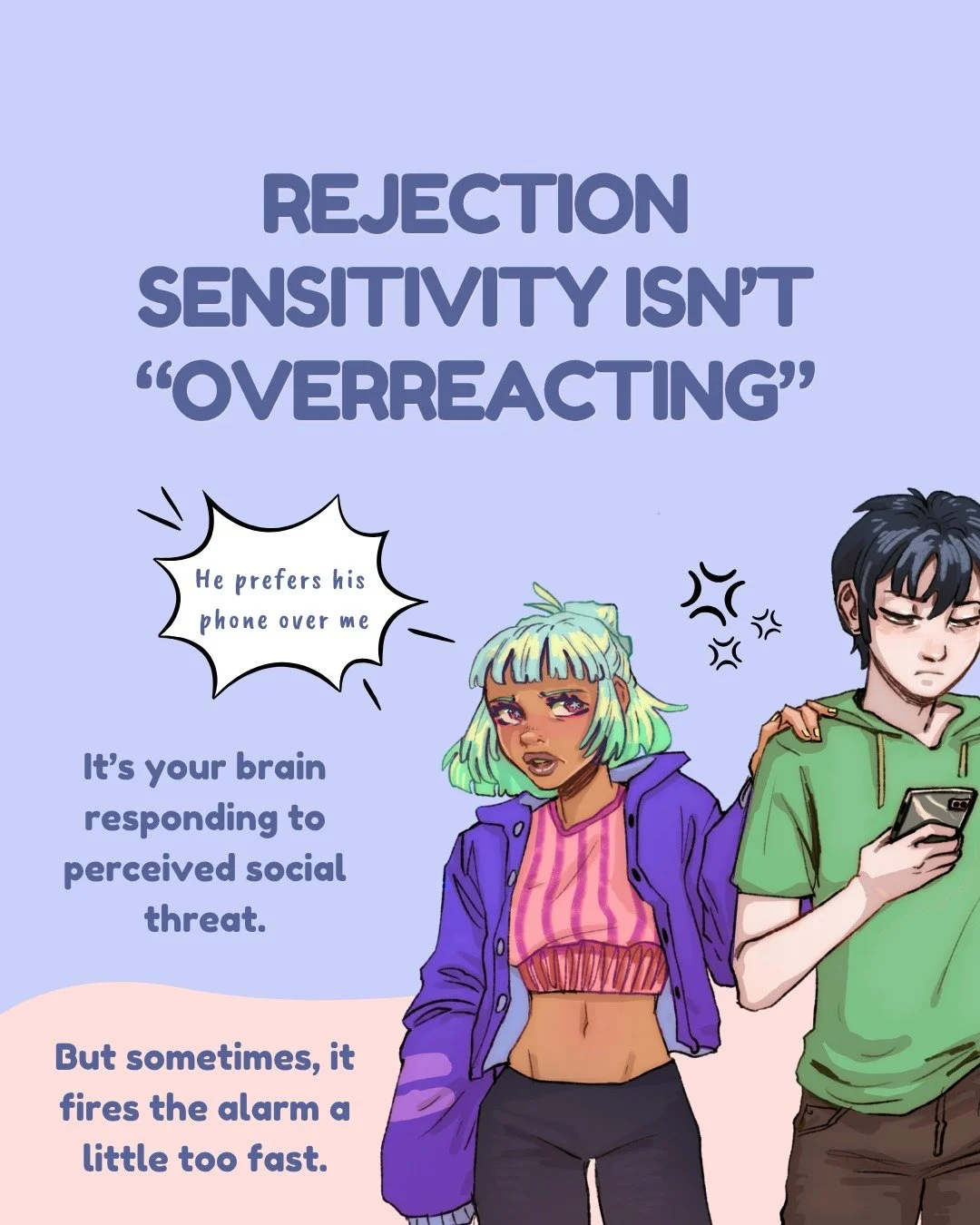
Rejection sensitive dysphoria is an intense emotional response to perceived or actual rejection, criticism, or failure. It is strongly associated with ADHD and autism and involves emotional pain that can feel overwhelming and disproportionate to the apparent trigger. RSD is not oversensitivity or drama — it is a neurological response that can significantly affect relationships, self-esteem, and willingness to try new things. For many neurodivergent young people, particularly girls, RSD is a central but frequently unrecognised feature of their experience.

School Can’t
School can't describes a situation in which a young person is genuinely unable to attend school despite wanting to, due to anxiety, emotional overwhelm, sensory overload, or other psychological factors. It is distinguished from truancy (where attendance is avoided covertly and without significant distress) and from school withdrawal, where a parent or caregiver keeps the young person home. School can't is not a choice, a habit, or a parenting problem. It is a signal that the young person's needs are not currently being met, and that the environment — at school, at home, or both — needs to change.
Check out our School Can’t Cards.
School Refusal
School refusal is a broad term for persistent difficulties attending school that are driven by emotional distress rather than deliberate truancy. It encompasses school avoidance, school can't, emotionally based school avoidance (EBSA), and related presentations. School refusal is significantly more common in neurodivergent young people, is more prevalent in girls than clinical recognition suggests, and responds best to early, collaborative, compassionate intervention rather than attendance-focused pressure.

Sensory Processing Differences
Sensory processing differences describe variations in how the nervous system receives, interprets, and responds to sensory information — sound, light, touch, smell, taste, movement, and internal body signals. Sensory processing differences are common in autism, ADHD, and related profiles and can result in hypersensitivity (where sensory input feels overwhelming), hyposensitivity (where more input is needed to register sensation), or a fluctuating mix of both. School environments — with their noise, lighting, crowds, and unpredictability — can be profoundly dysregulating for young people with sensory processing differences.
Shutdown
A shutdown is a response to overwhelm in which a person withdraws, goes quiet, becomes unresponsive, or appears to disengage. Unlike a meltdown, which is externally visible, a shutdown can be easy to miss — particularly in girls, who are more likely to shut down than melt down. A person in shutdown is not choosing to disengage; they are in a protective state that their nervous system has moved into because it has become overwhelmed. Demanding engagement, speech, or explanation from a person in shutdown is unhelpful and can prolong the episode.
Featured Products




Be YOURSELF; everyone else is already taken.
– Oscar Wilde

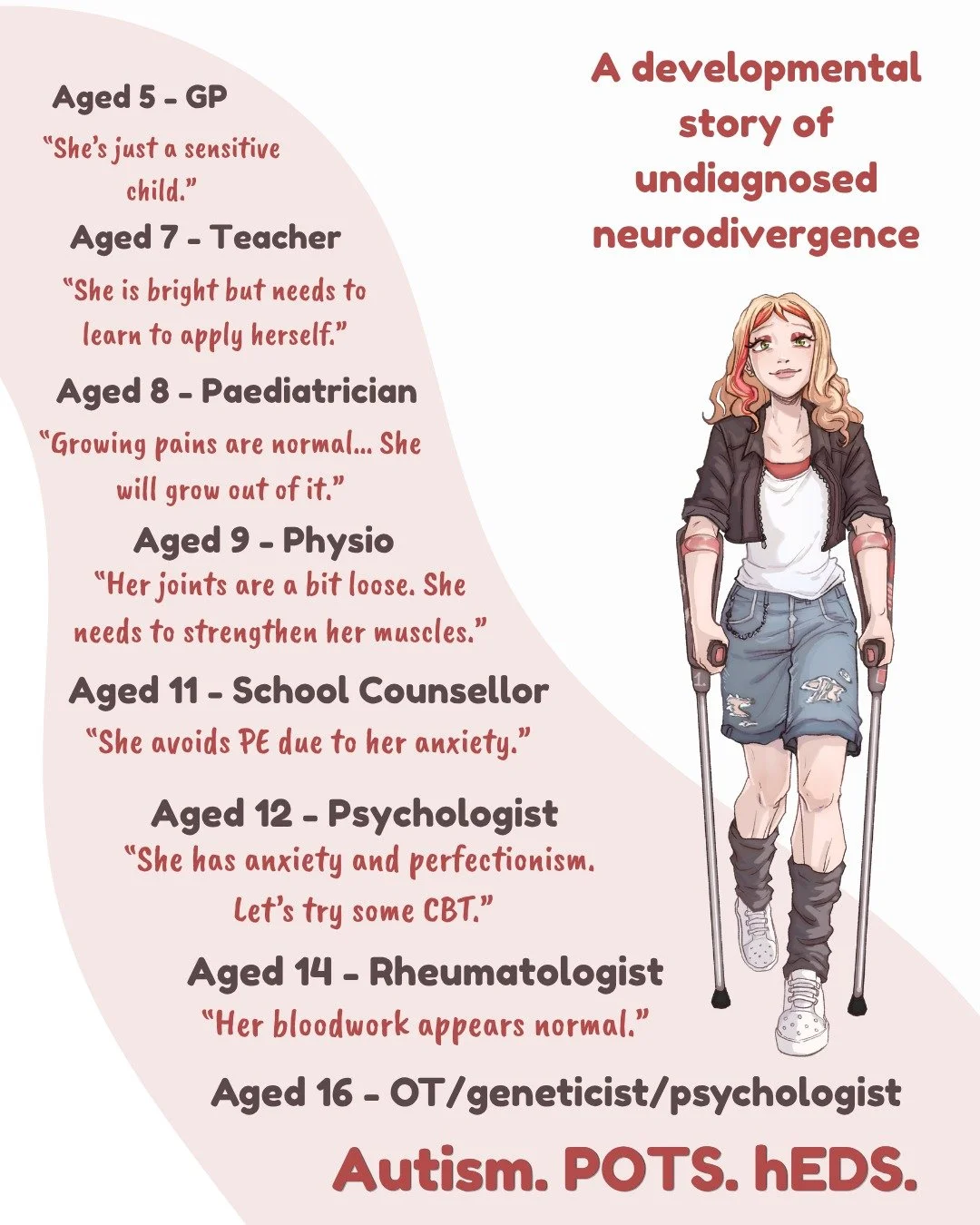


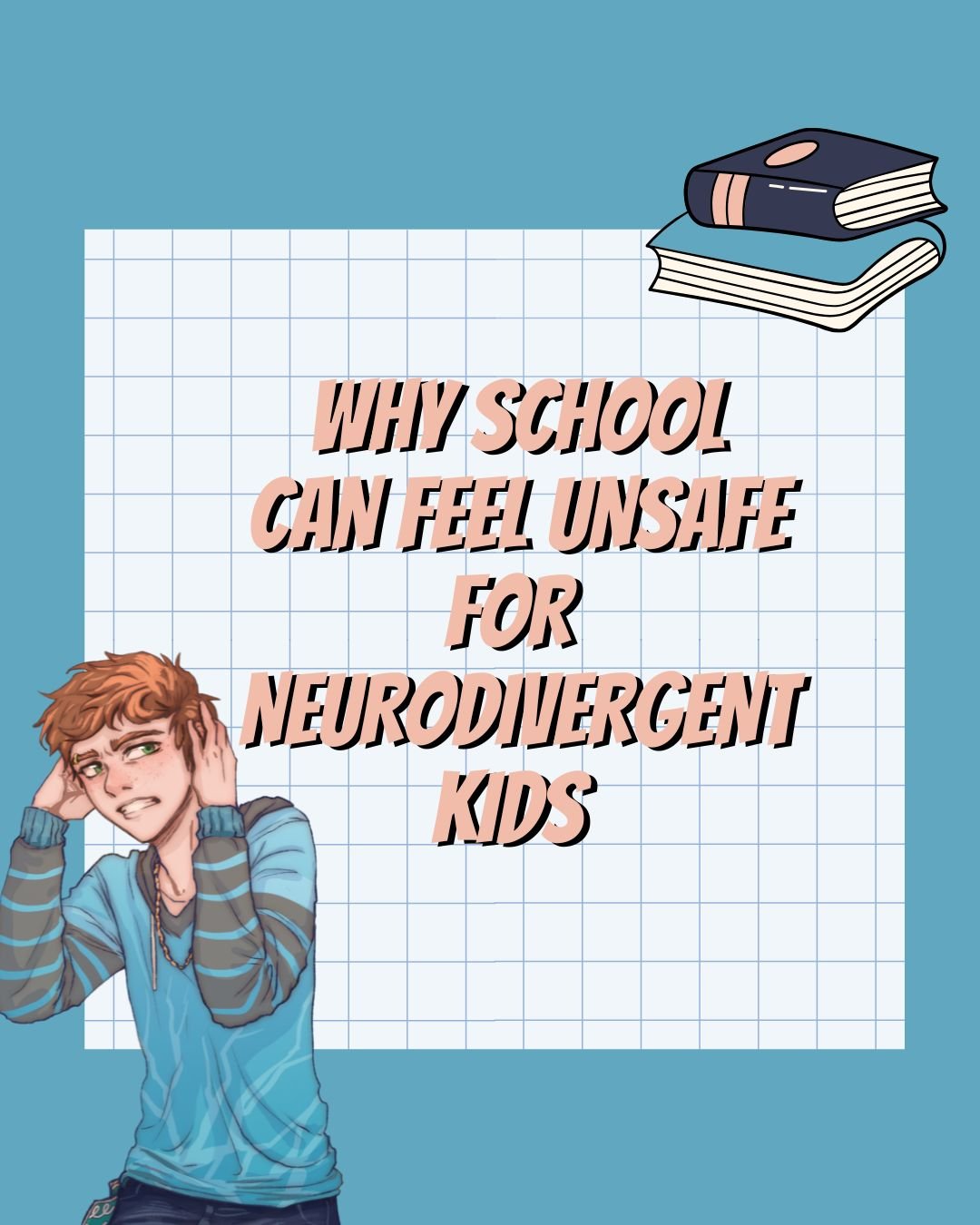
Save 20% with the School Refusal Toolkit — including the Beyond School Refusal Guide (School Edition) and School Can’t Cards (Digital).
Some students are not refusing school — they are unable to access it in the current conditions. This bundle brings together two clinical resources designed to help schools understand School Can’t (school refusal / EBSA) and respond without blame, ultimatums, or escalating pressure.
What’s included in this bundle?
Beyond School Refusal Guide (School Edition)
This practical, neuroaffirming school refusal support guide helps schools understand what is driving attendance difficulties, including anxiety, sensory overwhelm, demand avoidance, burnout, and unmet neurodivergent needs.
It provides a clear framework for understanding “can’t vs won’t,” alongside practical classroom adjustments, and re-engagement planning tools. Designed to support gradual, capacity-based return-to-school planning that prioritises safety and connection.
Built by clinical psychologists. Designed for real classrooms.
School Can’t Cards (Digital) - Three Psychs
School Can’t Cards provide a gentle, practical way to explore what makes school feel overwhelming or inaccessible for a young person. This set of 56 printable cards supports understanding of sensory, emotional, social, and environmental barriers to attendance.
The cards reduce pressure in conversations, support emotional expression, and help identify underlying needs driving school refusal / EBSA. They can be used in sessions, at home, or in school settings to support collaboration and shared understanding.
Designed to complement the School Can’t Guide for a whole-school, neuroaffirming approach to re-engagement.
These resources are for you if…
You are a teacher, school leader, wellbeing staff member, or counsellor supporting students experiencing School Can’t, school refusal, or EBSA.
You are an occupational therapist, psychologist, social worker, or allied health professional supporting school engagement and participation.
You want practical, neuroaffirming tools that move beyond behaviour management and focus on genuine re-engagement and support.
After purchase, you’ll receive instant access to your digital download via the confirmation page and email.