 Image 1 of 1
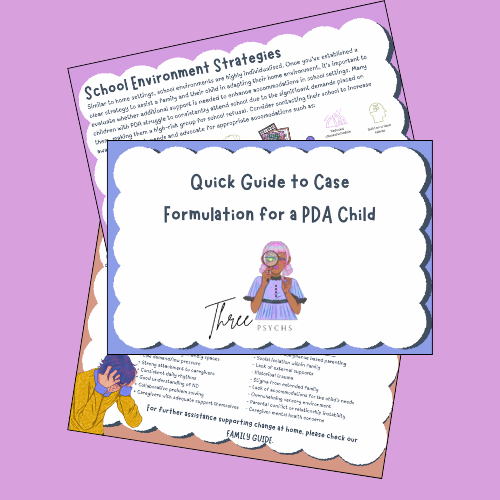
Quick Guide to Case Formulation for a PDA Child (Three Psychs)
A$5.00
This digital guide helps clinicians develop a neuroaffirming, context-sensitive understanding neuroaffirming.
After purchase, you’ll receive instant access to your digital download via the confirmation page and email.
Working with a child who presents with Pathological Demand Avoidance (PDA) can feel complex and nuanced — every child’s story is different. Their behaviours often stem from anxiety, sensory sensitivities, and a heightened need for autonomy and predictability.
This formulation guide can be used to support clinical interviews, guide formulation, and collaborate with families and schools on practical strategies to create a safer, more supportive environment at home and in the classroom.
This digital guide helps clinicians develop a neuroaffirming, context-sensitive understanding neuroaffirming.
After purchase, you’ll receive instant access to your digital download via the confirmation page and email.
Working with a child who presents with Pathological Demand Avoidance (PDA) can feel complex and nuanced — every child’s story is different. Their behaviours often stem from anxiety, sensory sensitivities, and a heightened need for autonomy and predictability.
This formulation guide can be used to support clinical interviews, guide formulation, and collaborate with families and schools on practical strategies to create a safer, more supportive environment at home and in the classroom.